

The Stockholm Programme: Focus on the citizen
What has the 2009 Swedish Presidency achieved in the area of justice and home affairs? Minister for Justice Beatrice Ask and Minister for Migration and Asylum Policy Tobias Billström highlight some of the most important points below.
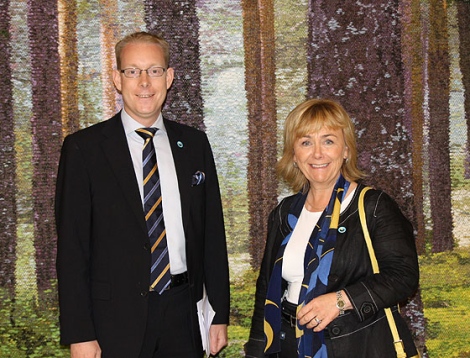
Photo: Johan Göransson/Regeringskansliet
Tobias Billström, Minister for Migration and Asylum Policy, and Beatrice Ask, Minister for Justice.
The Stockholm Programme, which defines the framework of EU efforts within police and customs cooperation, rescue services, criminal and civil law cooperation, asylum, migration and visa policy for the period 2010-2014, has dominated the Presidency for the two ministers at the Ministry of Justice, Beatrice Ask and Tobias Billström.
“Work on the Stockholm Programme has met with considerable commitment from the Member States. We are pleased that we have achieved the goals we set for the Stockholm Programme. The EU is focusing on the rights and needs of the individual. We are taking vigorous measures against crime. At the same time, we are safeguarding the rights of the individual across a broad spectrum, from migrants’ rights and a legally secure and predictable asylum process to the protection of privacy and support to victims of crime,” say Ms Ask and Mr Billström.
They personally contacted the Member States even before the Presidency. The European Commission then presented its proposal in June. The Programme was discussed at the informal ministerial meeting in Stockholm in July. In September, State Secretaries Magnus G. Graner and Minna Ljunggren at the Ministry of Justice met their colleagues from almost all the Member States to obtain their views on the proposal.
This has resulted in a Stockholm Programme that is ambitious and practical and that has a better balance between law enforcement and the rights of the individual. The citizen perspective is clear.
“When the Stockholm Programme enters into force, the greatest effect will be that the Member States and the JHA Council will have a clear framework for what they must focus on and will be able to work more effectively. Work against human trafficking will be strengthened. Serious crime will face tougher times. The personal details of individuals will be better protected,” says Ms Ask.
The greatest effect of the programme in the area of asylum and migration is that work on the common European asylum system will continue and that impetus will be given to the development of the EU external dimension. There was already broad consensus on this among the Member States at the informal JHA Council in the summer.
“I am very pleased that we have achieved clear texts on labour immigration and on migration and development,” says Mr Billström.
“We have confirmed the goal of having a common asylum system in place by 2012. The days of the asylum lottery are numbered. Visa exemption for the Western Balkans will mean a great deal for hundreds of thousands of people. From 19 December 2009, citizens from Serbia, Montenegro and the Former Yugoslav Republic of Macedonia will be able to travel without visas to the Schengen area. I think we should all be proud of this achievement,” concludes Mr Billström.
Five decisions taken in the JHA Council during the Swedish Presidency
- The Stockholm Programme (which defines the framework for EU police and customs cooperation, rescue services, criminal and civil law cooperation, asylum, migration and visa policy for the period 2010-2014).
- Concerted efforts against trafficking in human beings: a more coherent approach from more stringent criminal law to cooperation with non-EU countries.
- Better exchange of information for more effective law enforcement.
- The creation of a European Asylum Support Office, based in Malta’s capital, Valletta.
- Approval of an action plan for unaccompanied minors.
You can find a more extensive list in the document via the link on the right.
Published
23 December12:15
Council
Contacts
-
Martin Valfridsson
Press Secretary to Minister for Justice Beatrice Ask
+46 8 405 10 00
-
Markus Friberg
Press Secretary to the Minister for Migration and Asylum Policy Tobias Billström
+46 8 405 10 00

